A consistent link format helps readers recognize clickable text and makes an email easier to scan. In Mail Designer 365, you can set the shared appearance for text links and then apply emphasis to an individual link when it needs a different treatment. This guide explains both options and includes practical checks for readable, dependable links.
How to Add a Text Link
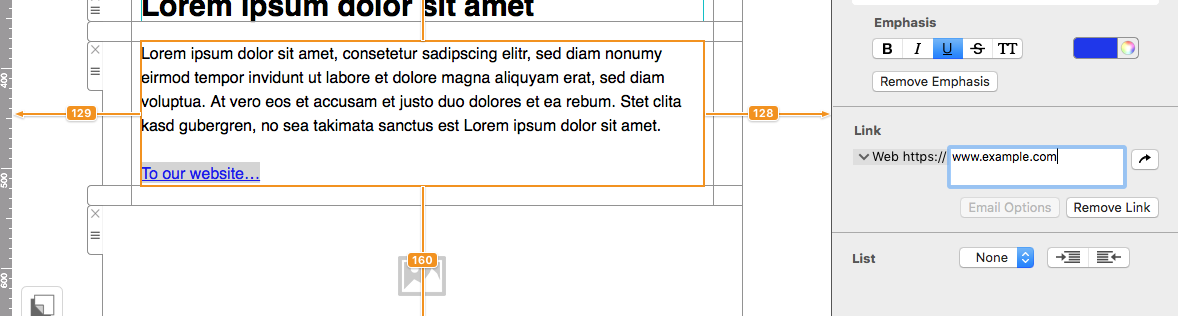
Start by highlighting the words you want readers to click. In the Style menu, use “Add Link” and enter the destination address. Choose meaningful linked words that describe the destination, such as “View the spring collection” or “Read the setup guide.” Avoid relying on vague text such as “click here” when a more descriptive phrase is available.
After adding the address, review it carefully. A complete web address should point to the intended page, while an email link should use the correct recipient address. Descriptive link text also gives readers useful context before they interact with the message.
Choose a Consistent Link Format
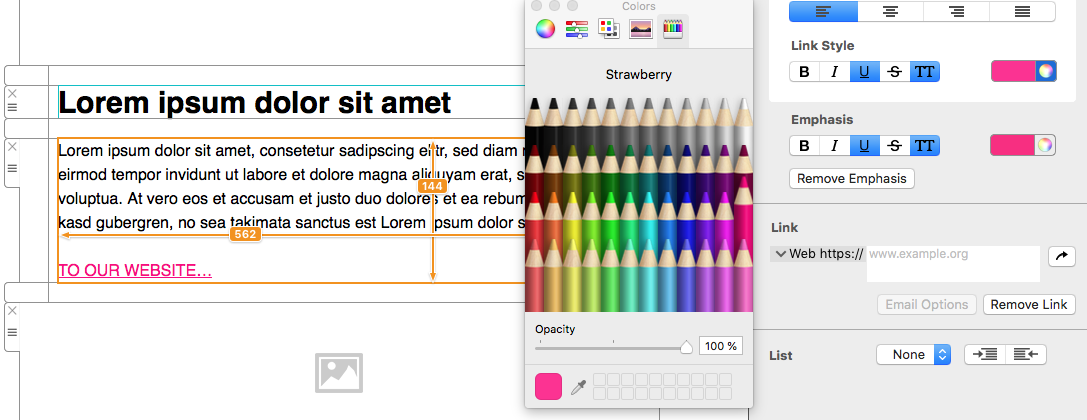
A newly added link uses the standard link appearance. To change the shared link format, open “Link Style” in the Style menu. You can adjust the color and choose treatments including bold, italic, underline, strikethrough, and all caps.
Choose a treatment that is clearly distinguishable from ordinary body text. Color can support that distinction, but it should not be the only visual cue. Underlining is familiar to many readers and can make inline links easier to identify. Bold can add emphasis, while extensive use of all caps or strikethrough may make longer phrases harder to read.
Keep the same link style throughout a message unless there is a clear reason to create an exception. Consistency reduces visual noise and helps subscribers understand which text is interactive. It also prevents one ordinary text link from competing with the main call-to-action button.
Format One Specific Text Link
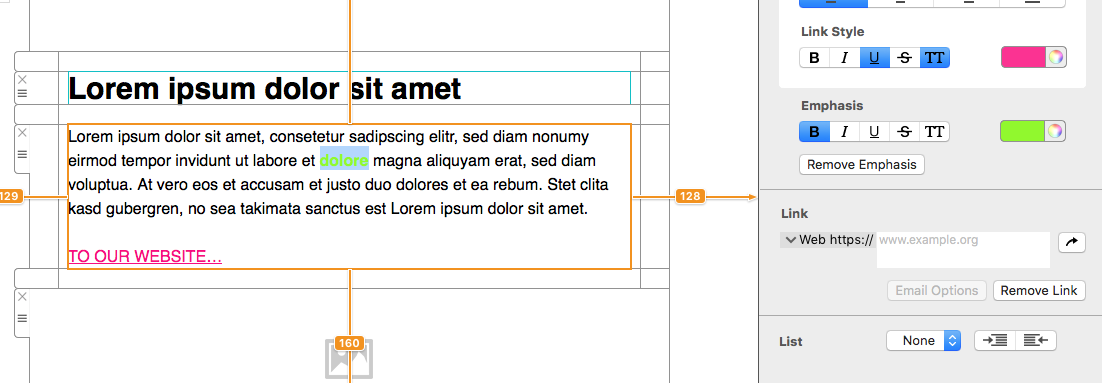
Sometimes one link needs to differ from the shared style. Select that link and use “Emphasis” in the Style menu to configure it separately. This is useful when the surrounding background, hierarchy, or context requires a more visible treatment.
Use exceptions sparingly. If every link receives a different color or treatment, readers lose the predictable pattern that makes links easy to recognize. First establish the shared style, then use individual emphasis only where it improves comprehension.
Link Format Checks Before Sending
Preview the email and scan it as a recipient would. Each linked phrase should be readable against its background and visually recognizable without requiring the reader to guess. Check that the linked wording still makes sense on its own and that nearby links are not crowded together.
Send a test message and open every link. Confirm that each destination loads, uses the expected secure address, and does not lead to an outdated or unintended page. If a destination includes campaign tracking, verify the parameters without changing the actual page address.
Also review the message at a narrow width. Text can wrap differently on smaller screens, so a long linked phrase may occupy several lines. Make sure the line breaks remain readable and that links are not placed so closely together that selecting the intended one becomes difficult.
Common Text Link Formatting Tips
Use one dependable link format for ordinary inline links, reserve buttons for the primary action, and keep linked wording concise but descriptive. Maintain sufficient visual contrast and avoid styling ordinary text so that it looks clickable when it is not. Finally, test the actual message rather than relying only on the editor view. These checks create a clearer hierarchy and a more predictable experience for subscribers.
How Can We Help?
A Quick Tour of Mail Designer 365
Background
Layout Blocks
TextScout
Editing Text
Links and Buttons
Configuring Text Styles
Tables
Image Areas
Images
Using Retina Images with your Design
Graphics and Other Objects
Creative Tools
Advanced Design Techniques
Blend Modes
Optimizing your Template for Mobile
Plain Text
Preview your Design
Feedback and Sharing
Preparing your Design for Sending
Contacts and Audiences
Sending Emails
1:1 Emails
Email Analytics
HTML Export
Other Sharing Options