
An email table gives you a structured way to arrange rows, columns, and content in a Mail Designer 365 layout. This guide shows you how to create an email table, change its structure, resize rows and columns, and prepare the layout for styling. Start with the information recipients need, then choose a table structure that remains easy to scan on smaller screens.
How to configure an email table layout
To get started, decide how many rows and columns your email table needs. Use only the cells required for the content so the message does not become crowded. You can add or remove rows and columns later, so it is fine to begin with a simple structure.
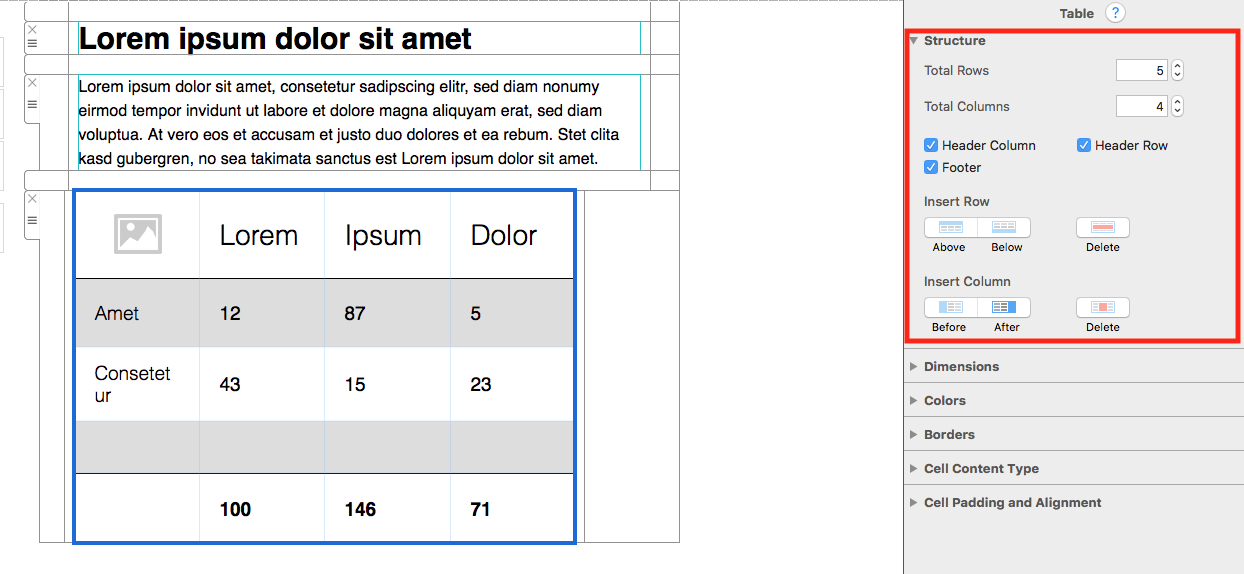
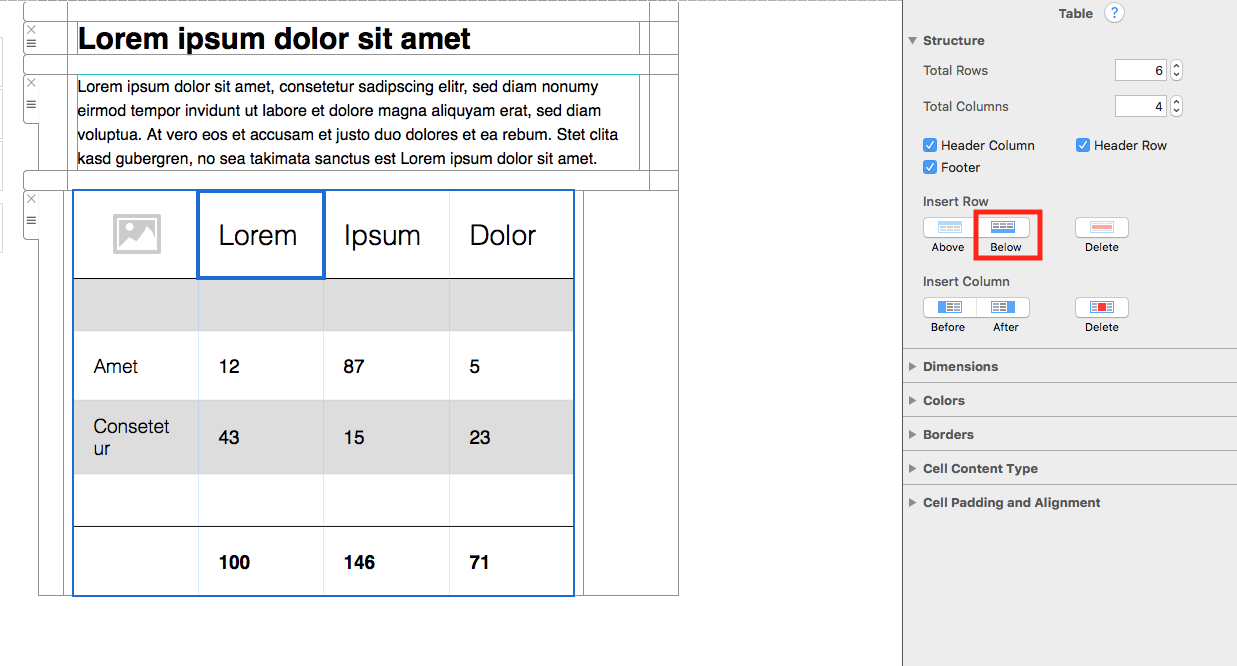
Click on the table. This will open the "Style" menu. Under "Structure", you can increase/decrease the number of rows and columns using the arrows. You can also use the selection tools to manually select (cmd + click) a cell in your table and insert a row or column above or below.
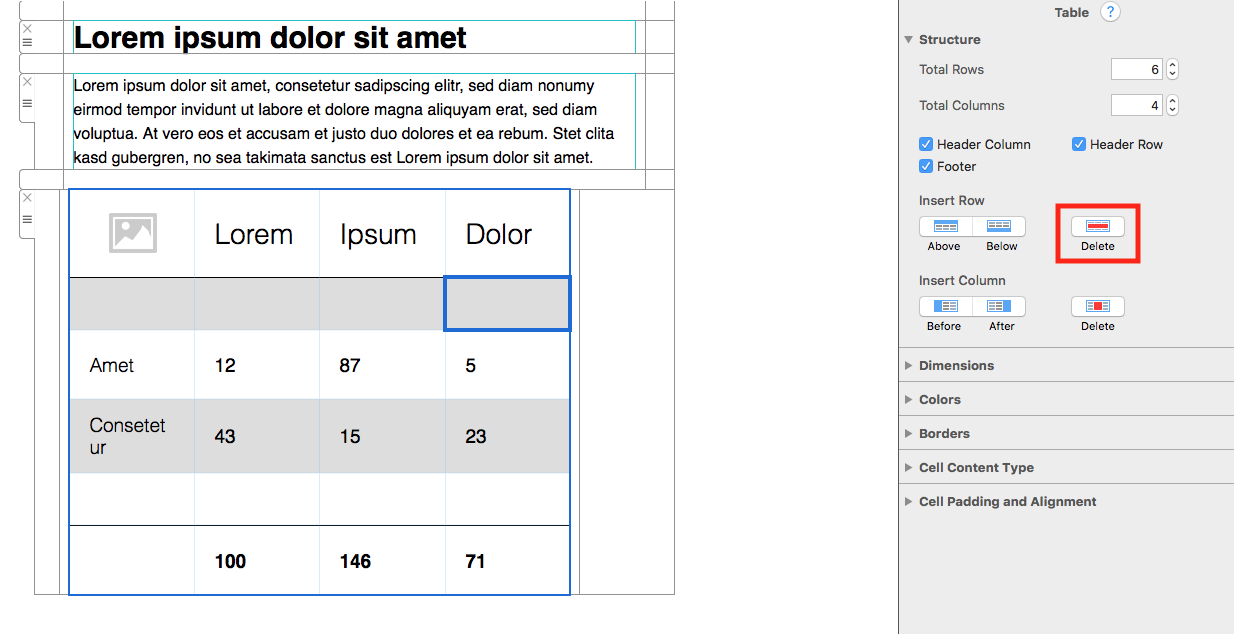
To delete a row or column, select (cmd + click) the cells and click on the delete button in the "Structure" menu.
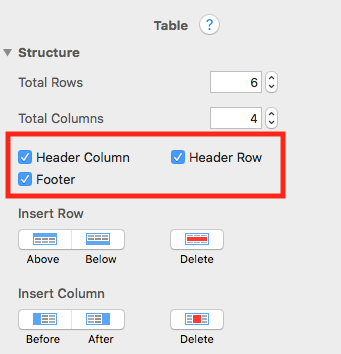
To activate different features in your table (e.g. headers, footers), you can check the tick boxes next to each feature:
Resize your email table
You can easily adjust the dimensions of your table by using the control panel. Click on your table and go to "Dimensions" under the "Style" menu. Next to each field (e.g. Table Width) you can enter a precise value, or manually adjust the dimensions using the arrow controls:
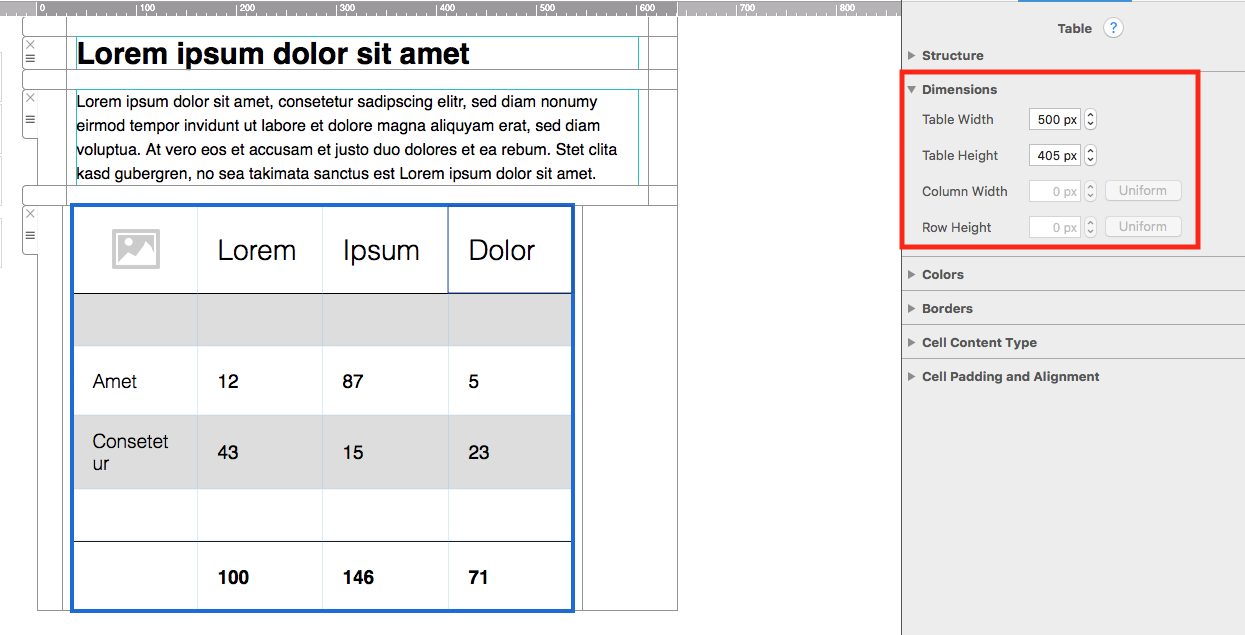
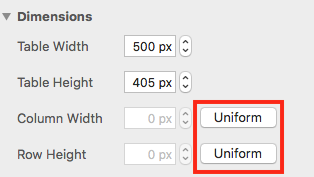
Click on the "Uniform" button to make all columns/rows equal in width/height.
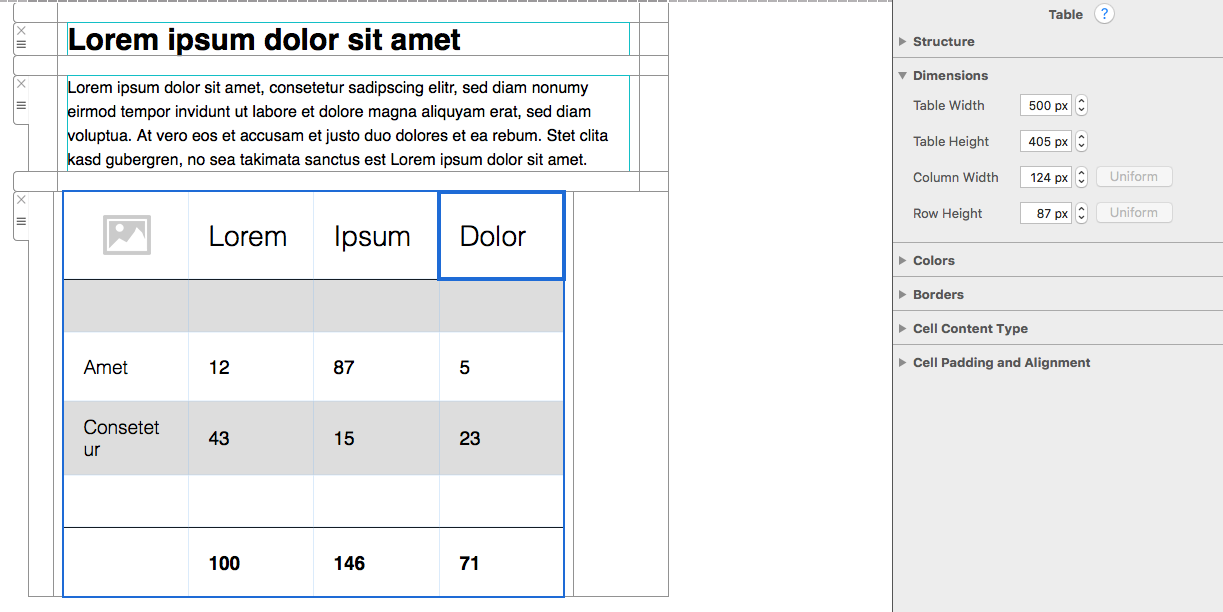
To change the dimensions of an individual cell within your table, click on the cell and use the controls as instructed above. Keep related columns consistent where possible. A predictable grid makes values easier to compare and reduces the chance that one cell draws attention for the wrong reason.
Check the table before sending
Review the completed email table in both the desktop and mobile previews. Check that labels are clear, text is not compressed, and the most important information is visible without unnecessary horizontal complexity. If the table feels difficult to scan, shorten the copy or reduce the number of columns rather than shrinking the text.
Send a test email to verify the layout in a real inbox. Table content can render differently across email clients, so check the message on the devices and inbox apps that matter to your audience. Also confirm that links, numbers, dates, and totals are correct before sending.
Common email table layout tips
- Use a header row when recipients need to compare several values.
- Keep column labels short and specific.
- Use consistent alignment for similar data such as prices or dates.
- Avoid adding empty rows only to create spacing; use the layout controls instead.
- Preview the email table after every major structural change.
Once you're happy with the layout of your table, you can now go on to edit the style in the next step.
How Can We Help?