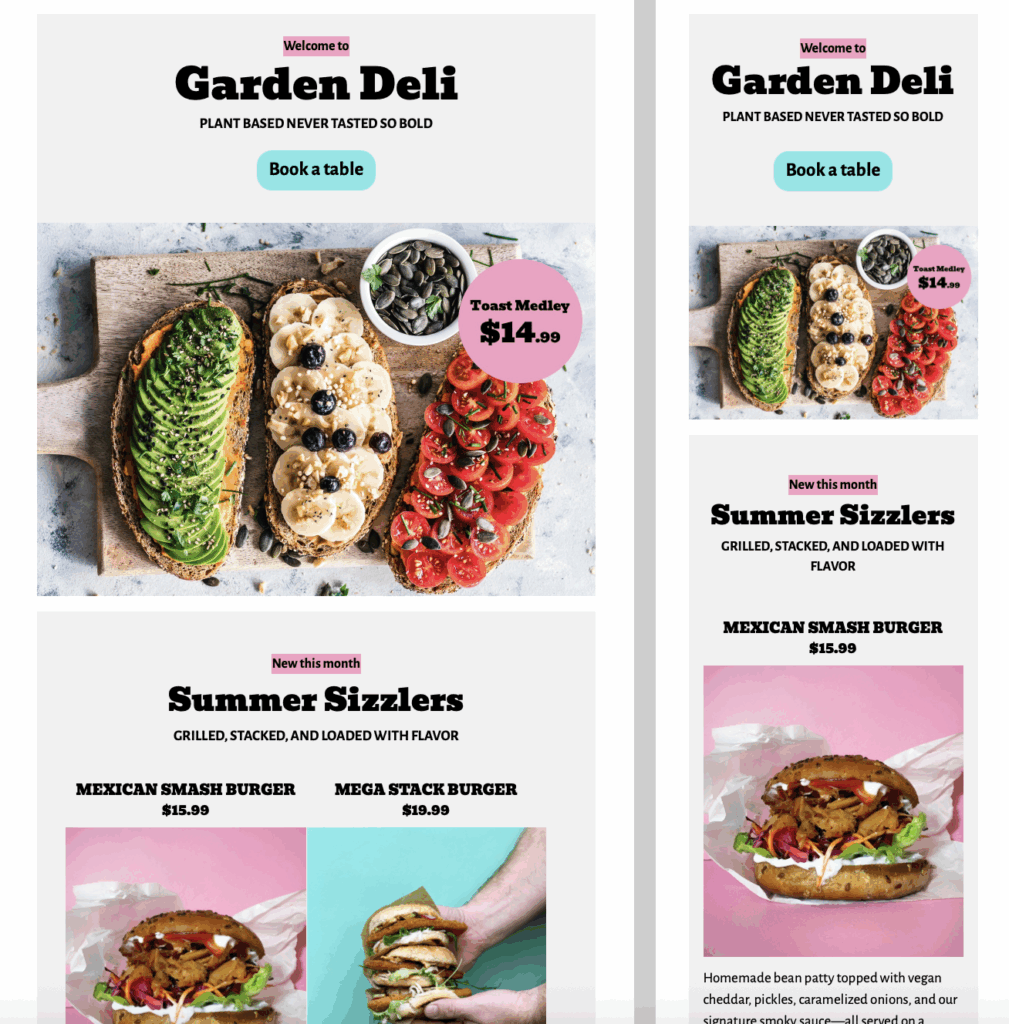
Plan a clear vegan restaurant email template
A useful vegan restaurant email template should tell recipients why the message matters and what they should do next. Vegan restaurants, cafés, and hospitality teams can use it to introduce a plant-based menu, promote a seasonal dish, or invite guests to a special service. Replace sample copy with the exact date, deadline, location, eligibility details, and contact route that apply to your campaign. Keep essential information as live text so the message still works when images are blocked.
The preview is described as: Vegan restaurant email template showcasing summer specials and desserts – features plant-based smash burger, stacked burger, berry brownie tower, and raspberry tarte. Use that visible hierarchy as the starting point in Mail Designer 365. Adapt the palette, typography, images, and button wording to your brand while preserving a clear reading order and following W3C contrast guidance for comfortable reading.
Customize the message for its real audience
Name the featured food or event, identify the location, state availability and booking details, and make dietary information precise rather than relying on imagery alone. Introduce the purpose early, group related details into short sections, and make the primary action easy to identify. Supporting copy should answer the questions that would otherwise generate replies, without burying the main message under generic marketing language.
Use image areas for atmosphere or product context, but do not place a critical date, price, address, or instruction only inside an image. Choose descriptive button labels that explain the destination. Where an offer has limits, state them next to the action instead of relying on a separate page to correct an ambiguous promise.
Verify the campaign before sending
Proofread names, dates, prices, addresses, and legal or eligibility details. Test the reply address and every link, send previews to desktop and mobile inboxes, and check that alternative text explains meaningful images. Confirm that menu, booking, and ordering links point to the correct restaurant location and that dietary claims match the actual offering.
Finally, compare the email with its destination page. The headline, offer, timing, and next step should remain consistent after the click. This final check protects trust, reduces abandoned actions, and makes the template practical rather than merely decorative.